


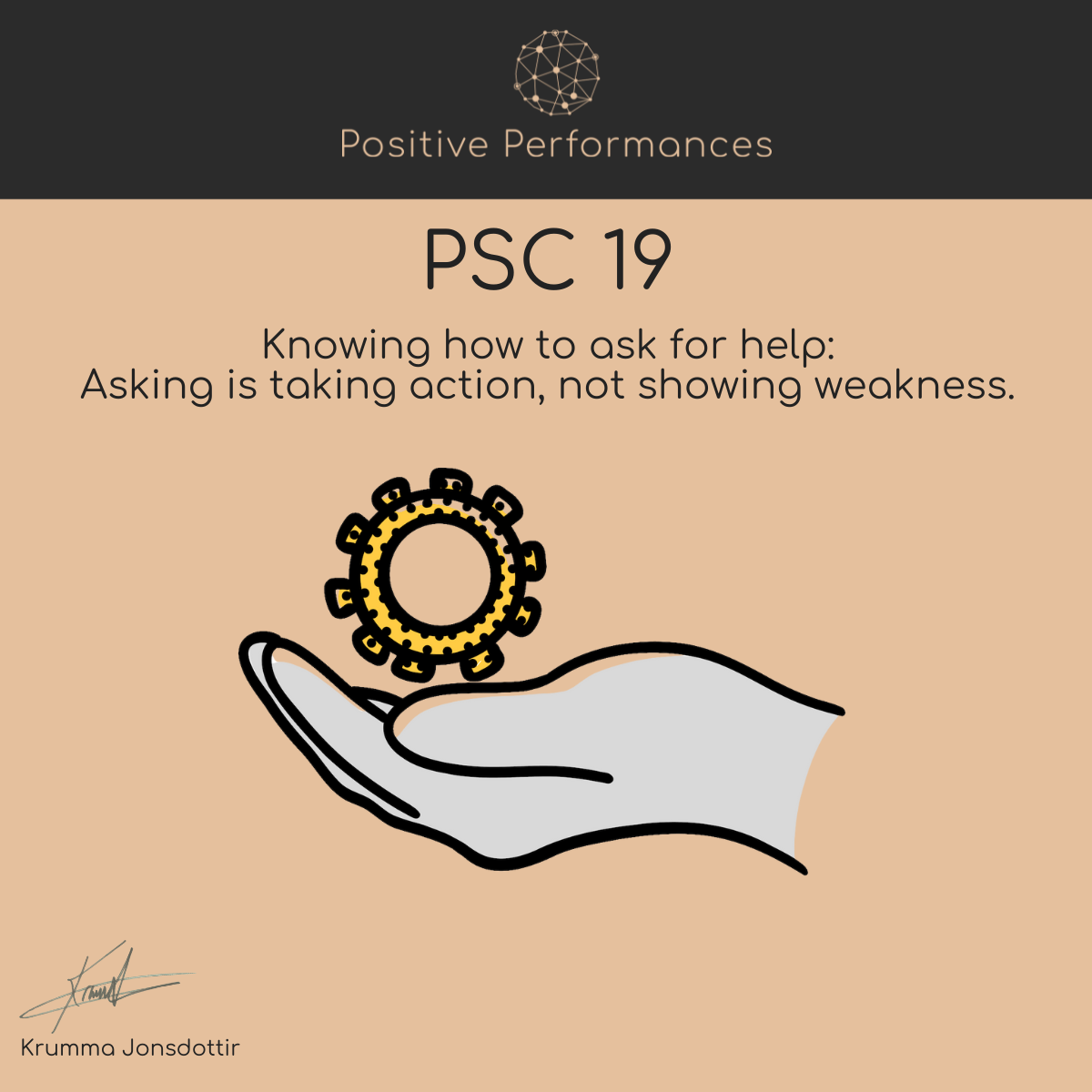
Asking for Help Means Believing Others Want to See You Succeed
PSC 19
Some of the simplest gestures require great inner strength. Asking for help is one of them.
It’s an act of courage — but above all, an act of faith in humanity: faith that others aren’t waiting for you to fail, but might actually be ready to reach out, support you, and help you succeed.
PSC 19 is the competence of chosen interdependence.
In psychosocial terms, this means being able to identify your needs, name them, and express them to others within a collaborative dynamic.
It’s about rejecting the myth of self-sufficiency and embracing a new story — one where success doesn’t isolate you but connects you to others. In this story, others are not obstacles but
resources.
Why is it so hard?
Because many of us were taught to handle everything on our own, not to disturb others, and to hide our weaknesses.
But asking for help isn’t apologizing for existing. It’s saying:
“I trust you. I believe you can help. I’m reaching out my hand.”
And that requires:
•
Healthy self-esteem, to recognize that you don’t know everything.
•
Respect for others, to believe they can and want to contribute.
•
Intentional humility, focused on cooperation rather than dependence.
And for leaders?
If you want to create a culture of mutual support within your team, start by setting the example.
Dare to say:
“I don’t have the answer. I need your input.”
It’s not losing face — it’s opening a space for trust, contribution, and mutual recognition.
🎯 Research shows that when asking for help is normalized and valued, teams make fewer hidden mistakes and show greater innovation and psychological safety.
Connected to Human Motivation
According to Deci & Ryan’s self-determination theory, this competence strengthens:
•
Connection: I build positive, sincere interactions.
•
Competence: I equip myself to grow, to find answers.
•
Autonomy: I choose not to endure but to move forward with support.
So asking for help is a free, competent, and deeply human choice.
🎯 Challenge
Today, identify a topic — even a small one — where you feel hesitation. Then formulate a clear, confident request for help. Notice not only the answer you receive… but especially what changes inside you.
And to go further, revisit PSC 16 (Effective Communication) and PSC 17 (Building Social Connections).
See you tomorrow,
Krumma
